Survey

To evaluate the impact of the SYLI program, Mercy Corps conducted a survey that asked a subset of the population (both in- and out-of-school youth) about their willingness to lend moral and material support to rebel groups, amongst other things.


These youth were matched using propensity scores based on their characteristics prior to the intervention, and were themselves selected from eight communities (three of which had no intervention, three of which received education only, and two of which received both education and civic engagement opportunities).


These communities were selected by a matching process based on their:


  1. level of urbanization,
  2. level of violence, and
  3. type of intervention (education, civil engagement, both, none).
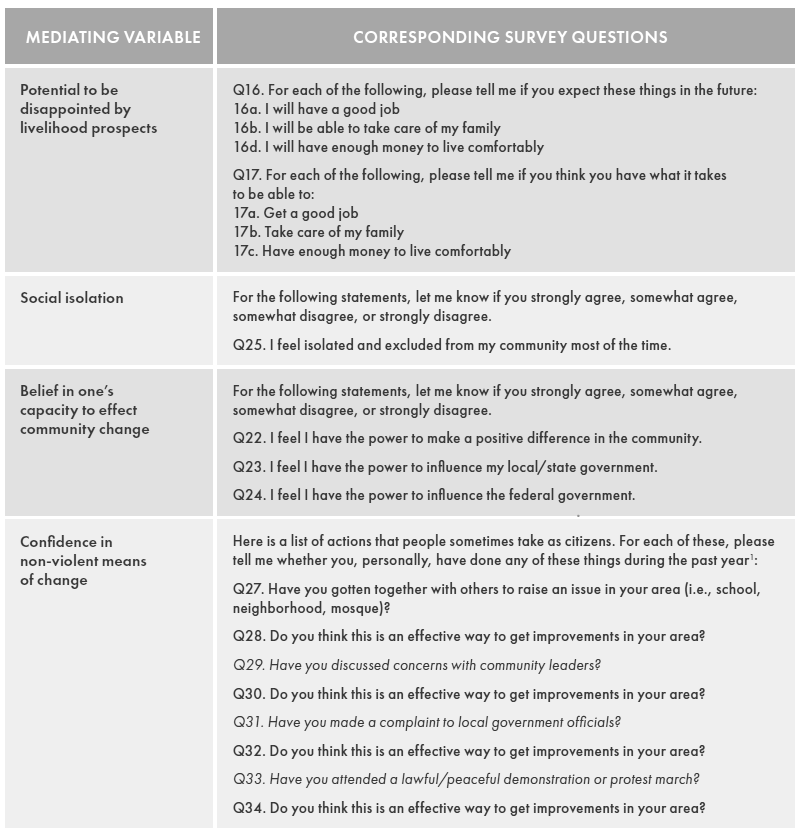
Mercy Corps Survey

Overview

In an attempt to decrease youth recruitment by rebel groups, from 2011 to 2017 the SYLI program improved access to secondary schools and youth civic engagement opportunities across Somalia. Mercy Corps concluded that this intervention successfully reduced youth support for rebel groups [3].

Why Somalia?

Somalia has been experiencing a civil war for over three decades, and has consistently ranked amongst the highest recruiters of child soldiers [1][2]. In 2017, the UN reported that "a total of 2,087 boys and 40 girls were recruited and used" during the Somali conflict [4].

Why Schooling and Civic Engagement?

Mercy Corps implemented this program to test the assumptions that increasing education and civil engagement opportunities could decrease youth support for rebel groups by:


  1. building the youth's trust in their government's ability to provide services, and

  2. demonstrating the potential for nonviolent political action.